

09 Apr Cola hispida
Scientific name: Cola hispida Brenan & Keay
Family: Malvaceae.
Distribution and conservation status: Occurs naturally in deciduous forests and is not widely cultivated. The species is becoming locally scarce due to forest degradation and overharvesting, although it is currently classified as Least Concern on the IUCN Red List.
Common names: Hairy cola (English), Atewo-edun (Yoruba).
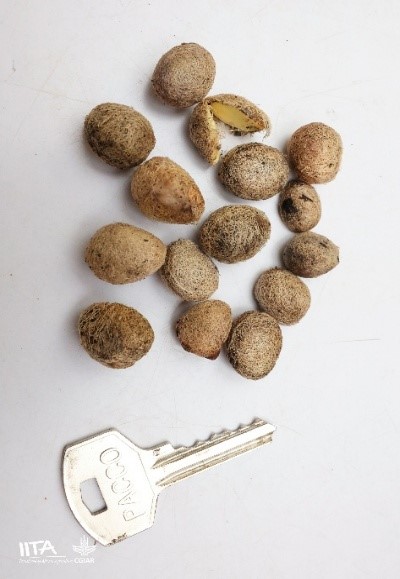
Fruit/seeds: Fruits are follicles (woody pods) that split open when mature.
Fruiting time: June-October.
Seed extraction method: Remove seeds from the pod.
Types of seed: Recalcitrant (cannot withstand drying or long storage; must be sown fresh).
Sowing method: Direct sowing into nursery polybags or seedbeds.
Sowing medium: Mixture of river sand and topsoil.
Germination Period: 14-21 days.
Germination percentage: 80% for fresh seeds (16/20 x 100)
Vegetative reproduction: Stem cuttings, grafting, or budding.
Planting: Requires partial shade when young.
Growth and development: Moderate growth rate up to 12–20 m tall, begin fruiting after 6-10 years, evergreen forest tree.
Notes: It is not commercially cultivated like kola nut species but is ecologically valuable and culturally important in local forest communities.